Farooq Abdullah joins efforts to pacify disgruntled lawmakers after repeated meetings over the cabinet expansion; demands reportedly include ministerial restructuring, removal of the CM’s adviser and a stronger push for statehood and Article 370
By: Javid Amin | 06 November 2026
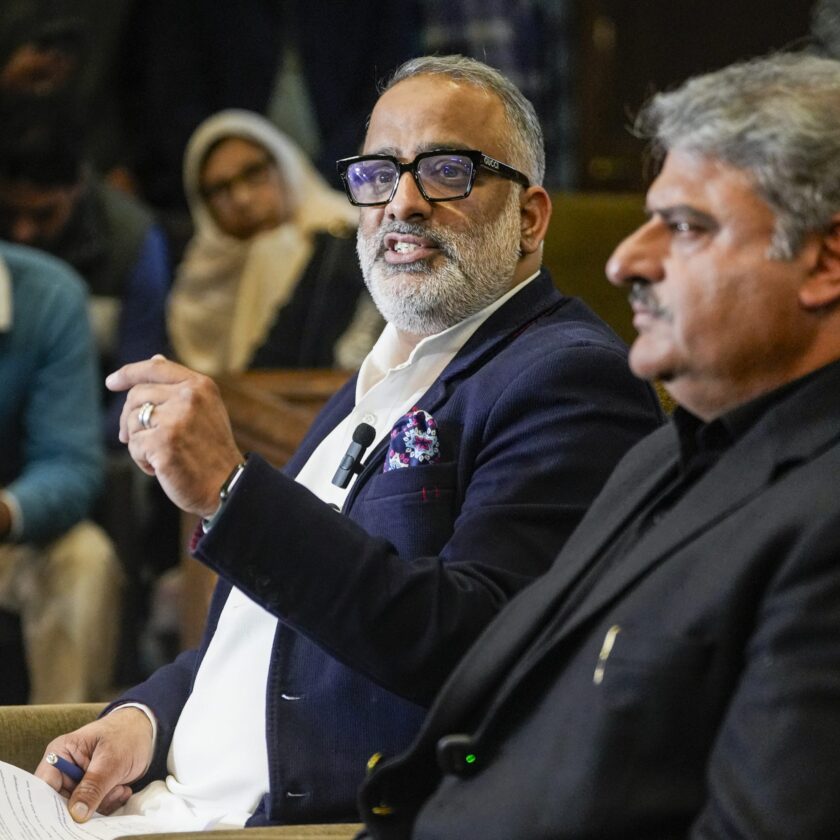
Srinagar: Jammu and Kashmir Chief Minister Omar Abdullah is holding crucial talks with a group of disgruntled National Conference (NC) legislators in an effort to contain the growing discontent within the ruling party following the October 27 cabinet expansion.
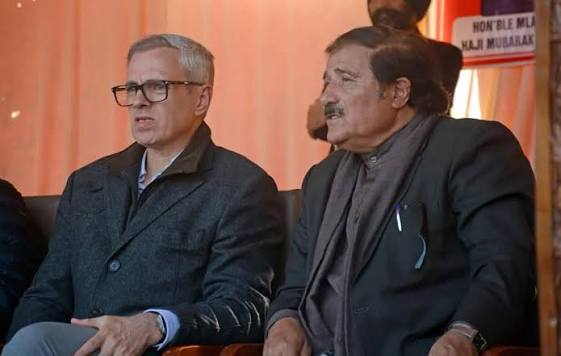
The meeting, involving NC president Dr Farooq Abdullah and the Chief Minister, marks the leadership’s most direct attempt so far to address the grievances of legislators who have held several closed-door meetings over the past week.
The discussions come after a series of consultations in Srinagar, where the dissatisfied lawmakers reportedly prepared a common charter of demands covering cabinet restructuring, ministerial accountability, the role of the Chief Minister’s advisers and the implementation of the party’s electoral promises.
The immediate objective is to prevent the differences from widening into an organised factional challenge. But the stakes extend beyond the distribution of ministerial positions. The dissent has exposed questions about consultation within the party, the balance between elected legislators and the government’s decision-making circle, and the NC’s political direction after returning to power.
The leadership now faces a difficult task: reassure its legislators without appearing to surrender control of the government’s administrative and political decisions.
From cabinet disappointment to an organised challenge
The latest crisis began after Omar Abdullah expanded and reshuffled his council of ministers on October 27.
The induction of four new ministers and the dropping of one sitting minister triggered dissatisfaction among several senior NC leaders who had expected greater representation in the government.
Some legislators who were overlooked for ministerial positions publicly expressed disappointment. The reaction soon moved beyond individual claims for cabinet berths, with a group of lawmakers beginning collective consultations.
The first major gathering was reported at the Srinagar residence of Lolab MLA Qaisar Jamshid Lone on October 30. Subsequent meetings took place at the residences of senior party legislators, including Nazir Ahmad Gurezi and former MP Hasnain Masoodi.
The repeated meetings suggest that the discontent has acquired an organised character. Rather than approaching the leadership individually, the legislators have been attempting to develop a common position and present their concerns collectively.
Reports on the size of the group have varied. Around 18 legislators were initially reported to have participated in the first major meeting, while subsequent accounts referred to approximately 20 participants, including those who joined virtually. Other reports have described a wider circle of more than 20 lawmakers expressing dissatisfaction.
These figures should not be treated as interchangeable: the number attending a particular meeting, the number supporting the demands and the wider number of dissatisfied legislators are different categories.
What are the dissident legislators demanding?
The grievances reportedly presented to the party leadership go beyond the appointment of new ministers. The legislators want changes in the way the government and party organisation function.
1. Cabinet restructuring and ministerial accountability
One of the central demands is a review of ministers who have been in the government since its formation in October 2024.
The group has reportedly sought the replacement of ministers considered to be underperforming, arguing that senior leaders and legislators overlooked during the latest expansion should receive greater consideration.
Some reports have referred to a demand for replacing four ministers who have served since the government was formed. The broader demand is for a performance-based restructuring rather than simply adding more members to an already expanded council of ministers.
2. Removal of Chief Minister’s adviser Nasir Aslam Wani
The reported demand for the removal of Nasir Aslam Wani has emerged as one of the most politically sensitive elements of the dispute.
The dissatisfied legislators are said to believe that too much influence has accumulated around the Chief Minister’s advisory circle and that elected representatives are not receiving adequate access to the government’s decision-making process.
This makes the issue larger than a disagreement over one appointment. It reflects a wider concern about who has access to the Chief Minister and how much influence elected legislators exercise over governance decisions.
Some reports have also named another adviser, Shammi Oberoi, in the group’s demands.
3. Review of portfolios and the Deputy Chief Minister’s responsibilities
The distribution of important departments has also become a source of dissatisfaction.
The Roads and Buildings portfolio held by Deputy Chief Minister Surinder Choudhary has reportedly attracted criticism from a section of the legislators. Some have sought its withdrawal or redistribution.
The disagreement is particularly sensitive because it involves the performance and authority of a senior member of the government rather than only the allocation of positions to overlooked legislators.
The dispute also reflects the regional dimension of the cabinet debate, with reports indicating that some legislators from Jammu have raised concerns about ministerial functioning and portfolio distribution.
4. A stronger political push for statehood and Article 370
The dissidents have reportedly argued that the government and party leadership must take a more assertive position on the restoration of Jammu and Kashmir’s statehood and the political demands surrounding Article 370.
This is particularly significant because these issues featured prominently in the NC’s 2024 Assembly election campaign.
The legislators’ reported position suggests that their concerns are not limited to administrative arrangements. They also want the party to demonstrate that its return to government has not diluted its political commitments.
There is, however, an important constitutional distinction. The elected Assembly can pass political resolutions and press the Union government on these issues, but it cannot unilaterally restore the former constitutional position or reverse the Supreme Court’s December 2023 judgment upholding the 2019 changes.
The demand is therefore also about political pressure, public accountability and the credibility of the party’s promises.
5. Better consultation and stronger party organisation
The reported charter also points towards demands for more regular interaction between the leadership and legislators, stronger internal accountability mechanisms and improved coordination between the government and the party organisation.
This may prove to be one of the most consequential parts of the dispute.
A ruling party cannot function effectively if its elected representatives feel disconnected from the administration or believe that important decisions are being taken without adequate consultation.
Independent legislators and the question of numbers
Another dimension of the dispute concerns reports that some independent MLAs are sympathetic to the dissatisfied group.
Reports have referred to independent legislators extending support to the dissidents, while also indicating that the party leadership wanted such legislators to remain outside the formal delegation meeting.
The exact number of independents backing the group has not been consistently established. Muzaffar Iqbal Khan, the MLA from Thanamandi, was reported as not attending the meeting. It would therefore be premature to describe the dissident group as a formal coalition of NC and independent legislators.
The distinction matters because the political strength of the group should be assessed through confirmed participation and actual support, not estimates circulating among party insiders.
At present, the central dispute remains an internal National Conference matter.
Why Omar and Farooq Abdullah’s intervention matters
The involvement of both Omar Abdullah and Farooq Abdullah gives the meeting considerable political importance.
Omar is not only the Chief Minister but also the head of the elected government whose cabinet expansion triggered the dispute. Farooq, as the party president and a senior political figure, carries organisational authority and the ability to mediate between the leadership and senior legislators.
The intervention is also an acknowledgement that the matter cannot be handled simply through routine statements from party spokespersons.
Earlier, Salman Ali Sagar sought to play down the divisions, saying the legislators were not rebels but respected party members with differences that could be resolved through discussion. He also indicated that the leadership had reached out to the aggrieved lawmakers.
The meeting is therefore being presented as an opportunity for reconciliation rather than a confrontation between the government and its own legislators.
But the outcome will depend on whether the leadership is prepared to address the substance of the demands.
A general assurance of unity may calm the immediate situation. It may not satisfy legislators seeking specific changes in portfolios, ministerial responsibilities and the Chief Minister’s advisory arrangements.
Is this a threat to Omar Abdullah’s government?
The current developments point to a serious internal political challenge, but they do not establish that the government is on the verge of falling.
The dissatisfied legislators have largely framed their demands as an effort to improve the functioning of the party and government. Their reported charter focuses on restructuring, accountability, consultation and political commitments.
There has been no confirmed collective withdrawal of support from the government or a formal move to bring down the administration.
This distinction is important. A ruling party can experience a substantial internal dispute without immediately facing a loss of its legislative majority.
The more immediate risk for Omar Abdullah is political and administrative: prolonged factional tension could weaken coordination within the ruling party, complicate government decisions and damage public confidence in its ability to deliver on its promises.
If the dispute remains unresolved, every cabinet decision could become an opportunity for another round of internal criticism.
The Ruhullah factor: a separate crisis, but an uncomfortable backdrop
The internal dissent is unfolding at a particularly sensitive time for the National Conference because of Aga Syed Ruhullah Mehdi’s departure.
Ruhullah’s resignation from the party and announcement that he was leaving the Srinagar parliamentary seat have created a separate challenge to the NC’s political narrative. His criticism has centred on the party’s commitments after 2019, particularly Article 370, constitutional rights and the promises made during the 2024 election campaign.
There is no established evidence that the dissatisfied legislators are acting in coordination with Ruhullah or preparing to join his proposed political movement. Their grievances also have a different immediate origin: the cabinet expansion and questions about internal consultation.
Nevertheless, the two developments intersect politically.
Ruhullah has publicly questioned the NC leadership’s direction. The dissatisfied legislators are now demanding changes in the way the party and government function. Both developments place pressure on the leadership to demonstrate that internal criticism can be heard and addressed.
For the NC, the challenge is to prevent separate disagreements from reinforcing one another and creating the impression of a party losing control of its internal political space.
What happens if the meeting fails?
The next phase will depend on whether the talks produce specific commitments.
Three broad outcomes are possible:
-
A negotiated settlement: The leadership agrees to review ministerial performance, improve consultation and consider changes in portfolios or organisational responsibilities. This would allow the legislators to return to normal party functioning without a public confrontation.
-
Partial concessions: The leadership offers assurances and limited organisational changes but avoids major cabinet restructuring. This could reduce immediate tensions while leaving some grievances unresolved.
-
A prolonged standoff: If the legislators believe their concerns have been ignored, they may continue meeting collectively, press for a stronger response or escalate their demands publicly.
The third possibility would be particularly damaging because it could turn a dispute over cabinet appointments into a longer-running challenge to the party leadership.
The coming days will show whether the group is seeking a negotiated correction within the NC or preparing to maintain a separate centre of pressure.
Bottom line: a test of leadership, not just cabinet arithmetic
The November 6 meeting is an important moment for Omar Abdullah and the National Conference. It brings the party’s internal grievances directly before its two most influential leaders and creates an opportunity to prevent the dispute from escalating.
But the crisis has exposed deeper questions than who received a ministerial berth and who did not.
It has raised concerns about the relationship between elected legislators and the executive, the influence of advisers, the accountability of ministers and the distance between the NC’s electoral promises and its performance in government.
For Omar Abdullah, the challenge is to retain authority while reassuring his own legislators that they have a meaningful role in governance. For Farooq Abdullah, it is to preserve party unity without allowing longstanding grievances to remain unresolved.
The real measure of success will not be whether the legislators leave the meeting smiling. It will be whether the leadership follows the talks with concrete decisions.
For now, the National Conference has opened a channel for reconciliation. Whether that channel produces a settlement or merely postpones a deeper confrontation remains the central question.